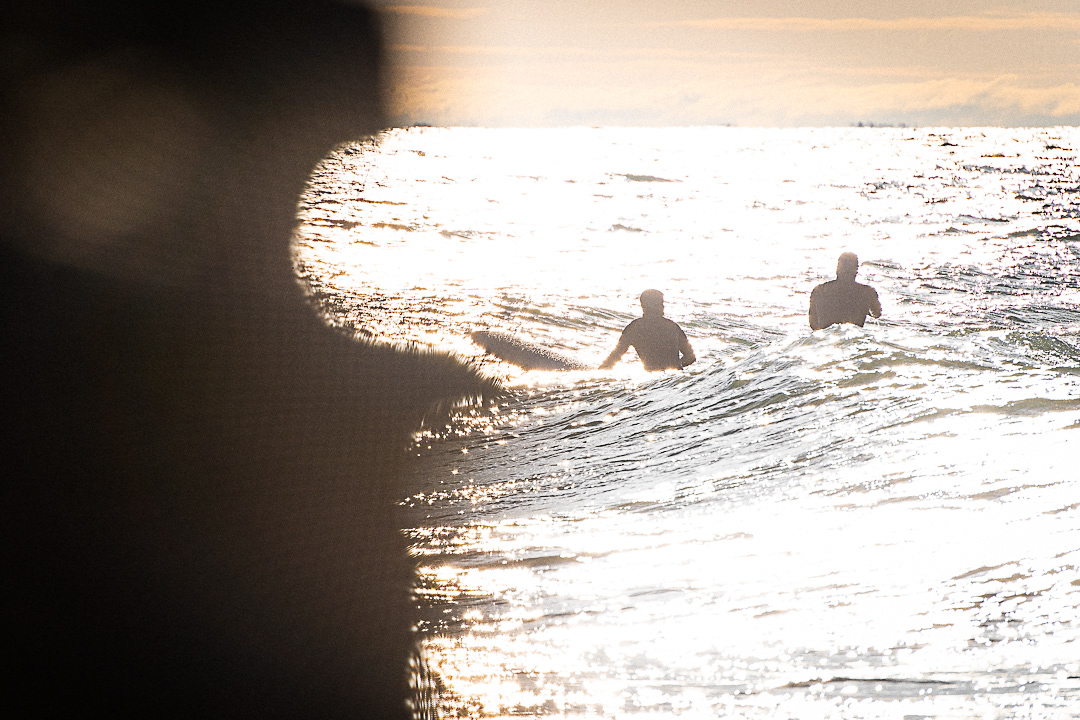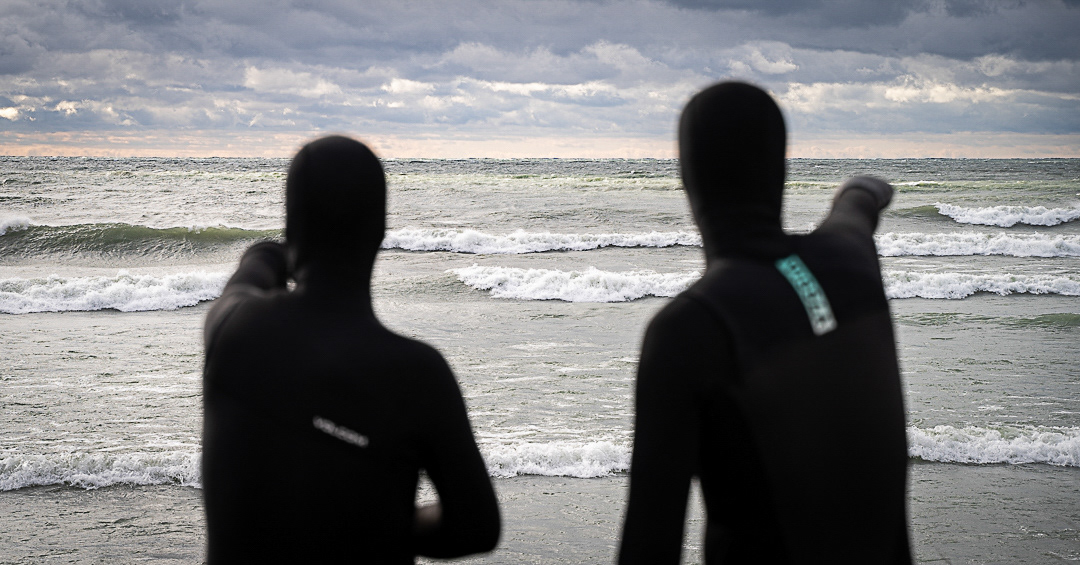
When the howling winds known as the Witch of November sweep across the Great Lakes during winter storms, most people stay inside. However, a certain few grab a piece of Glassed Styrofoam, pull on a rubber suit, and try to ride the power of the wind and waves generated by these mega squalls.
The “Dad Patrol”—a crew of surf buds including Tyler Beatson, Andrew Seale, Ian Carleton, Neil Rimmer, and Robin Kaufman—are local surfers who put all the pieces together for days like this. Their pre-mission rendezvous takes place at OAK Clothing Company/Surf Club in Wellington, Ontario, where Seale lays out the plan before the group heads off in convoy through farmers’ fields toward Canada’s third coast: a secret surf spot along the north shore of Lake Ontario, nicknamed Calder Point. A few inches of snow had fallen the night before, and temperatures had dropped low enough to freeze car door locks. Still, this wasn’t even the –20°C weather lake surfers often endure in winter—it was considered a warm fall day. At the beginning of the season, the best—and coldest—conditions were still to come.
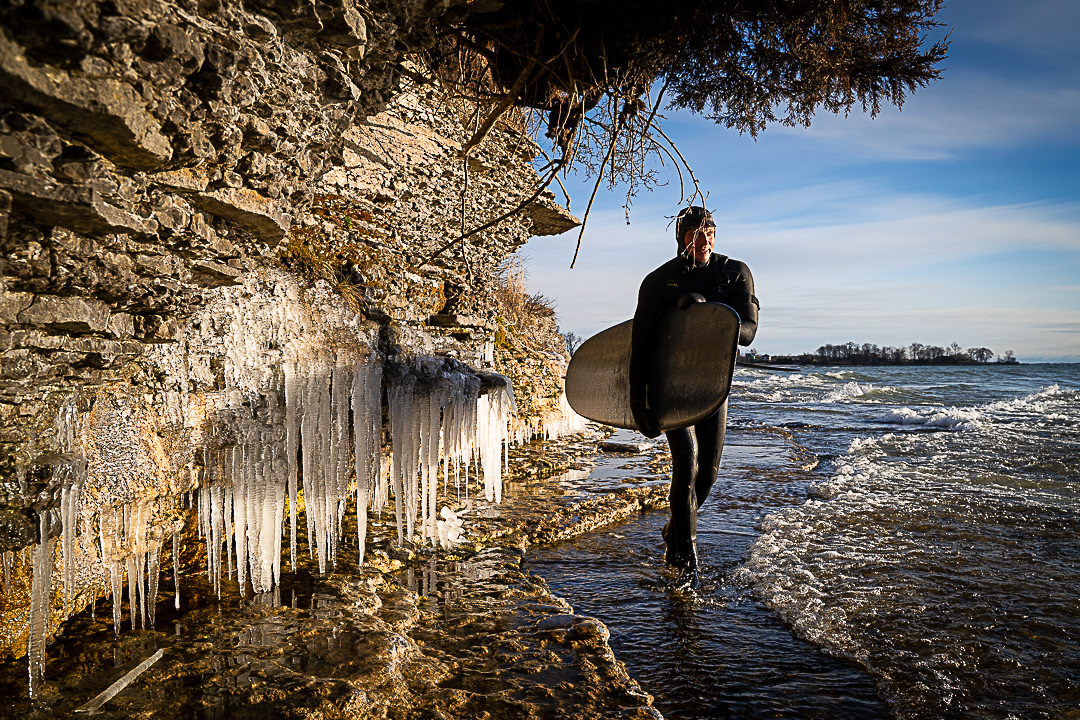
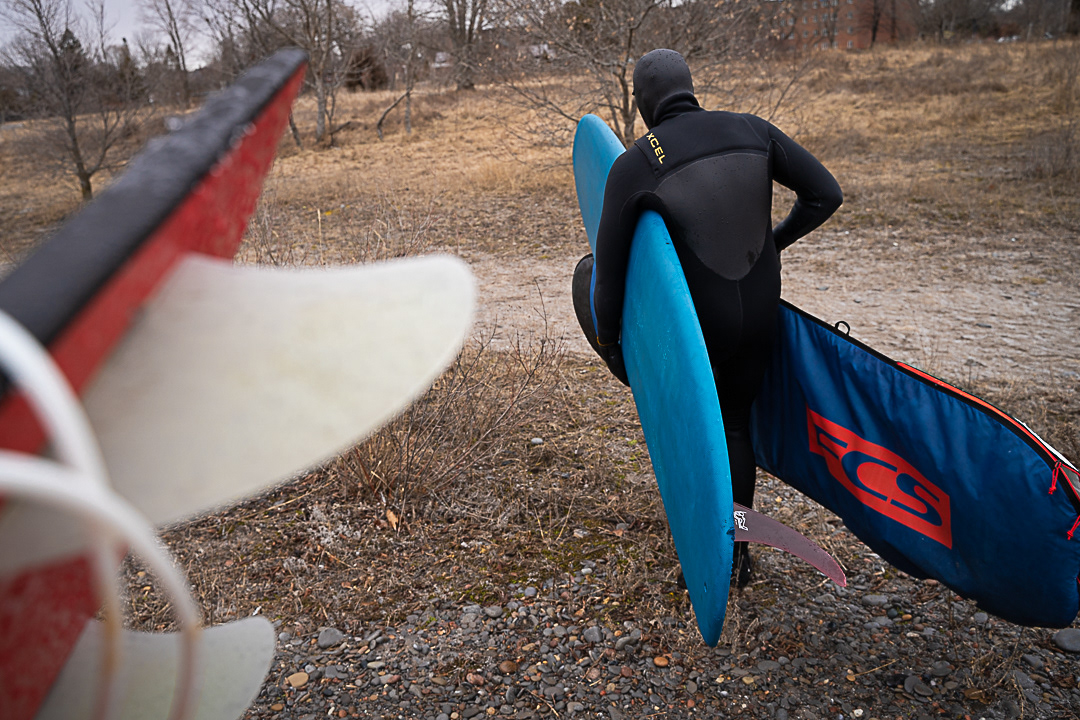
Beautiful, clean, peeling waves are few and far between here, so lake surfers often have to settle for what nature gives them. The shoreline of Lake Ontario stretches over 1,000 kilometres. Swells are unpredictable, usually driven by ferocious winds that churn the water into a chaotic mess. Much of the coast borders private property or is difficult to access by car, and hiking in with a nine-foot foam torpedo that catches the wind like a sail—becoming an unwieldy and unpredictable swinging hazard—is no easy task.
In the end, finding waves means aligning your knowledge of weather, local terrain, and wave mechanics—while also working around daylight and everyday responsibilities like jobs and kids. It takes effort. Constant checks. Watching what happens, where and when. Long drives to spots that don’t pan out, followed by the decision to stay or turn back defeated. And then there are the rewarding moments—arriving to see other surfers already in the water, confirming your theory. But the best-case scenario is proving to yourself that the magic can happen here: clean, breaking waves with no one else around. Empty canvases of fun—sacred little things most people overlook.
A quick check down a long path reveals exactly what they hoped for. They don’t even finish the walk before turning back for their gear. In the frosty air, feet and arms wrestle into tight, stiff wetsuits. one surfer using plastic bags to slide his feet through the leg holes. Getting into these suits is hard, but getting out is worse.
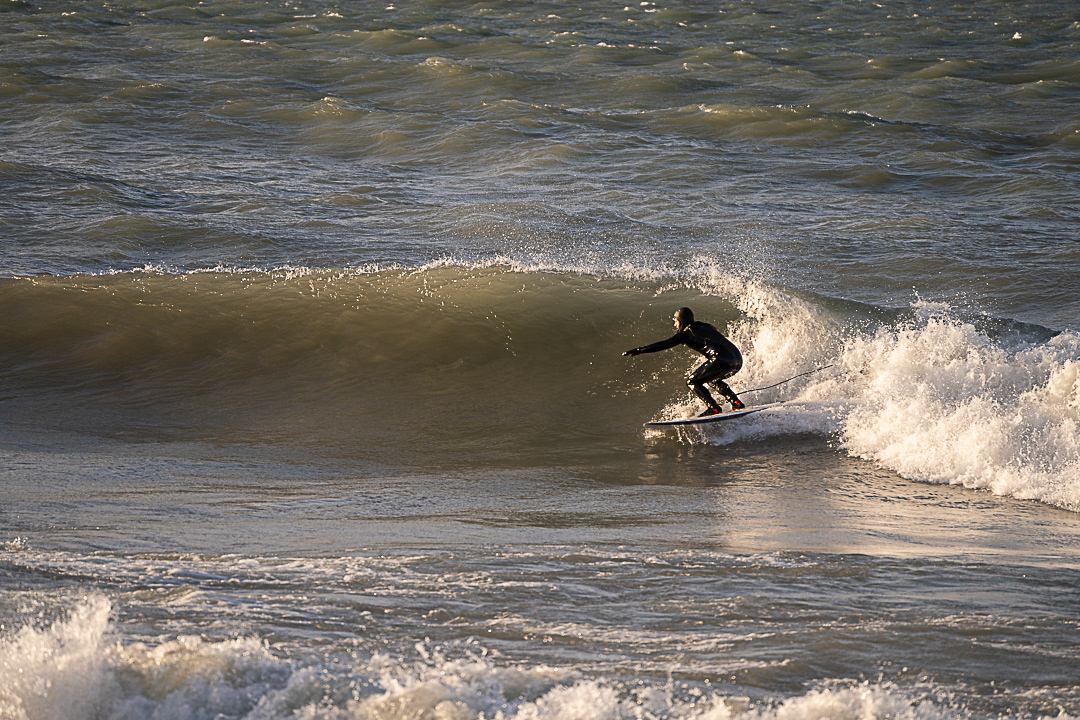
The Dad Patrol pushes a kilometer or more against the wind down the long beach to a point where waves peel. The current is strong and the waves are inconsistent, but the crew makes the most of what nature offers, catching several waves during the session.
After each ride, the surfers walk back along the point to return to the takeoff spot rather than swim against the current—a futile effort, like running on a treadmill. As the wind clears the clouds, a bright blue sky emerges, transforming the stormy winter scene into something closer to a warm fall day. By afternoon’s end, the crew makes their way back to the parking lot, A quick debrief in the parking lot—waves caught, waves missed, conditions discussed—leads to a unanimous conclusion: it was an absolute ripper of a day. The crew fuels up on cold sandwiches, pours warm water into their booties, and wrestles out of wet wetsuits before heading off to make daycare pickups on time.
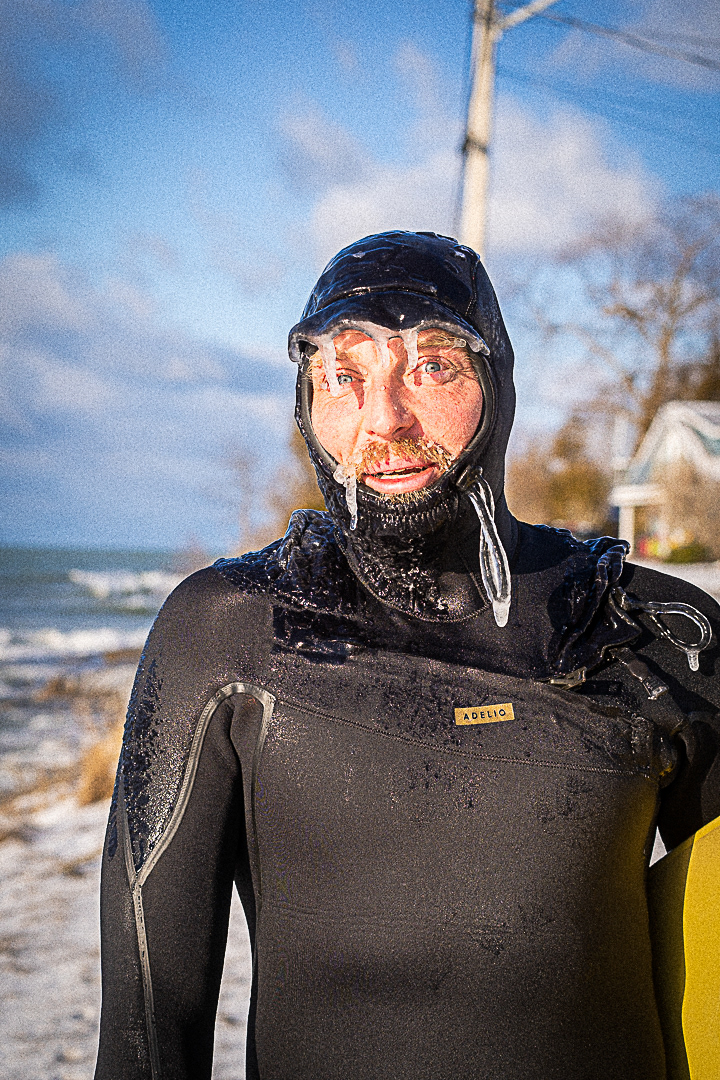
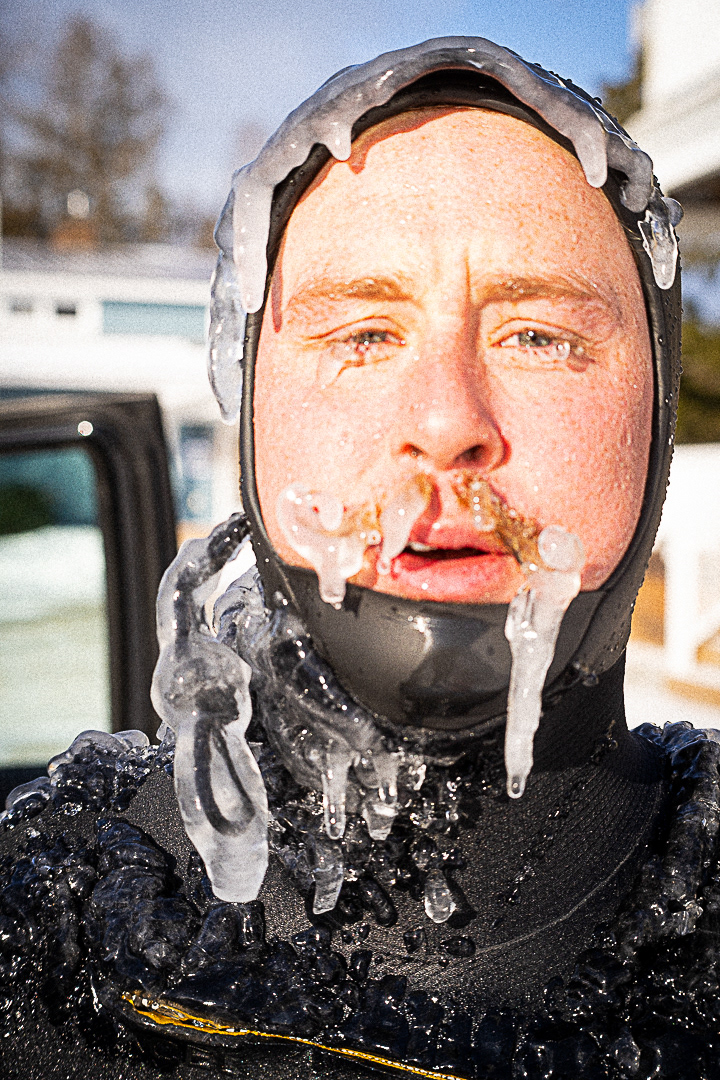
Tyler Beatson, who has been involved in lake surfing for several years, explains the history, culture, and mindset behind this niche sport. He speaks at the Oak Surf Club, the surf themed café inside OAK Clothing Co.
“The idea behind it was to create a community-driven space that people would want to meet at or hang out at—and the surfing part is just kind of what we are passionate about,”
Beatson says, seated beneath a beautifully handcrafted nine-foot-eight emerald green noserider—a longboard designed for smaller waves—mounted to the ceiling. He explains that lake surfing has likely existed for over 50 years, and that the shop serves as a kind of basecamp for local surfers, similar to those in other lake and river surf communities across Canada.
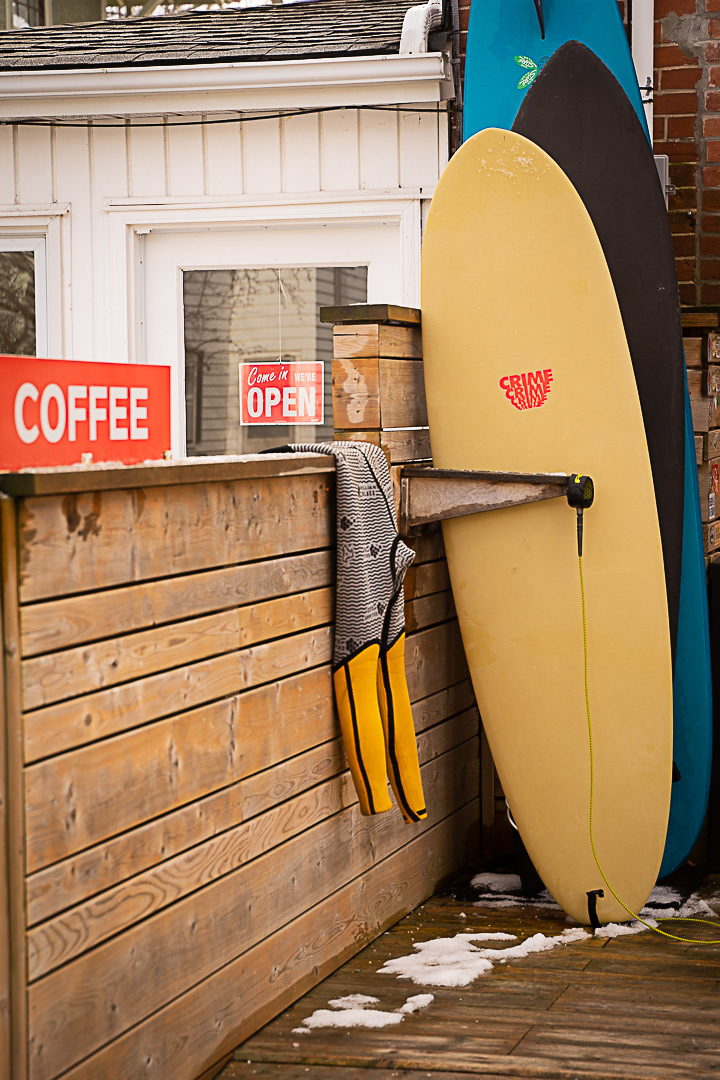
“You end up with guys coming into town to surf, hanging out here and chatting. It also supplies local surfers with gear—fins, leashes, wax—things they no longer have to drive to the city to get anymore.”
Time spent driving, Beatson says, is best used searching for waves. Surfing the lake is often as much about patience as it is about time in the water.
“It’s tough because it’s not predictable like the ocean. I feel like the lake surfer is pretty dedicated to learning how to find waves—and then getting into the cold water too,” he laughs. “Every time you duck under a wave or paddle out, you get an ice cream headache. It’s pretty intense. It gets trippy in winter because the air can be –20 and the water is actually warmer—it’s super weird.”
The conditions can be harsh, but as wetsuit technology improves and cold-water surfing grows in popularity, the excuses for staying dry continue to shrink.
“You can’t take it too seriously out here—we’re not pro surfers. I just want to see people smiling in the water, having fun. It’s such an amazing activity—why not do it? The reward is there. Surfing is so much fun. I just think it’s cool that we can even do it on the lake. We’re so grateful it exists. It’s amazing you can surf here at all.”